Tasting
Pistachio cream, paste, purée and praline: the differences and how to use them
The same name, “pistachio cream”, is used for a product made of nothing but pistachios and for a spread that contains 5%. The only way to tell them apart is to turn the jar round.
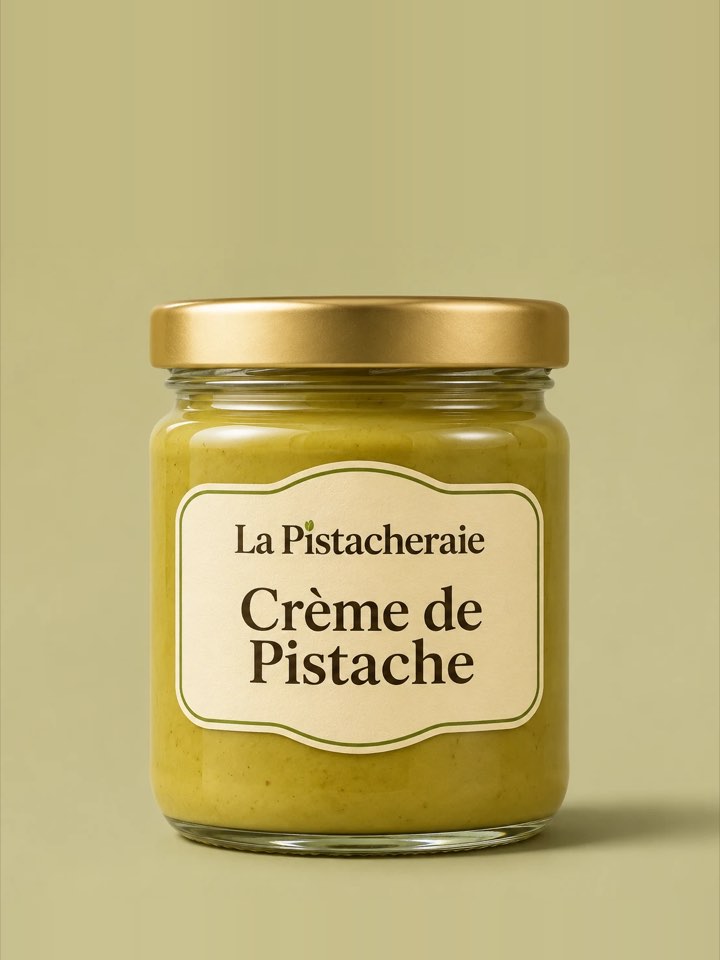
Since Dubai chocolate put pistachio on every shelf, green jars have multiplied. They have similar names and very different contents. Here is how to tell them apart, and which one to choose for what you want to make.
What is the difference between pistachio paste and pistachio cream?
In principle, paste is a pastry chef’s ingredient and cream is something you spread. In practice, manufacturers use the words as they please, because no regulation defines them. The table shows what you will most often find behind each name.
| Name | What is in it | Share of pistachio |
|---|---|---|
| Pistachio purée (or pistachio butter) | Ground pistachios, nothing else | 100% |
| Pure pistachio paste | Very finely ground pistachios | 100% |
| Flavoured pistachio paste | Pistachios, sugar, water, flavouring, colourings | about 50% |
| Pistachio cream, pistachio spread | Sugar, vegetable oils, pistachios, milk powder | 5 to 60% |
| Pistachio praline | Pistachios and caramelised sugar, ground together | half or more |
Remember where the dividing line lies: on one side, products that contain nothing but pistachio, whatever they are called; on the other, sweet preparations in which pistachio is one ingredient among several.
How much pistachio is in a pistachio spread?
In November 2026 we looked up the ingredients of around fifteen pistachio spreads on the Open Food Facts database. Their pistachio content ranges from 5% to 60%. Half of them fall between 10 and 25%.
- The supermarket “Dubai-style” versions are around 10%.
- Spreads from fine-food brands show 15 to 25%.
- Premium products go up to 40, 50 or 60%.
- The rest of the jar is sugar, sunflower oil or palm fat, and milk powder.
Do the sums in the shop: it is revealing. A spread with 18% pistachio sold at €31 a kilo means paying €173 a kilo for the pistachio, and the same price for the sugar. A 100% pistachio purée costs between €48 and €88 a kilo.
Colour is another clue. The bright green of these products almost always comes from colourings: E141, a chlorophyll derivative, often combined with E100, curcumin. A pistachio purée with no colouring is khaki green, sometimes brown if the pistachios were roasted.
How do you read the label on a pistachio product?
European law helps you on two counts. Ingredients are listed in descending order of weight: if sugar comes first, the jar is mostly sugar. And the quantity of an ingredient must be stated whenever it appears in the product’s name or is highlighted in words or pictures. A jar called “pistachio cream” must therefore show its percentage of pistachio.
Five checks, in this order:
- The percentage of pistachio. That is the figure that matters.
- The first ingredient. Pistachio, or sugar?
- Added fats. Sunflower oil, palm fat: ground pistachios release their own oil and don’t need any more.
- Colourings and flavourings. E141, E100, E161b, “flavouring”: they stand in for the colour and taste that there isn’t enough pistachio to provide.
- Where the pistachios come from. Rarely stated. When it is, that is a good sign.
How do you use pistachio cream?
Once again, it depends on what is in it. A sweet cream is for spreading, and that is about it. A 100% pistachio purée is an ingredient, and it goes anywhere.
- At breakfast. On toast with a drizzle of honey, or a spoonful stirred into plain yoghurt.
- In baking. In pastry cream, a ganache, a financier or macaron mixture. Allow one to two tablespoons for 500 g of mixture, then adjust: the flavour is strong.
- In ice cream. Stirred into the custard before churning. You will get a khaki ice cream, not a fluorescent green one: that is its real colour.
- In savoury cooking. Loosened with olive oil and a little pasta water, it makes a Sicilian-style pesto. It also thickens a vinaigrette and goes well with burrata.
One word of caution: a pure purée is not sweet. In a dessert, you decide how much sugar goes in, which is an advantage.
How do you make pistachio paste at home?
A pure paste needs one ingredient and a good food processor.
- Use shelled, raw, unsalted pistachios. For a greener paste, choose blanched ones, without their purple skins.
- Put them in the oven at 150 °C for about ten minutes. They should warm through without colouring: the heat helps the oil come out.
- Blend them while still warm, a minute at a time, scraping down the sides. The powder turns into a thick paste, then, after five to fifteen minutes depending on the machine, into a smooth, glossy one.
- Don’t add water: it would stop the paste from keeping. A pinch of salt, if you like.
The result will be grainier than a professional paste, which is stone-ground, but the flavour is there. For a sweet version, what you want is a praline: pistachios coated in caramel, cooled and then blended. Homemade paste keeps in the fridge, in a clean, tightly sealed jar; there is more detail in our article on storing pistachios.
Frequently asked questions
What is pistachio cream?
Most often, a sweet Italian-style spread made of sugar, oil, milk powder and 5 to 60% pistachios. A few producers also use the word “cream” for a purée made of nothing but ground pistachios. Only the label will tell you which.
Is pistachio cream healthy?
A 100% pistachio purée has the qualities of the pistachio itself: fibre, protein, and fats that are mostly unsaturated. A spread with 15% pistachio is first and foremost a sugary, fatty product, and should be treated as such. See our article on pistachio calories and health benefits.
Can you use pistachio spread instead of pistachio paste in a recipe?
No, not weight for weight. A spread is mostly sugar and oil: it throws the recipe off balance and gives little flavour. A recipe that calls for pistachio paste assumes a 100% product, unless it says otherwise.
Does pistachio cream contain alcohol?
The spread doesn’t. But the same name is also used for a liqueur, along the lines of crème de cassis. If you are looking for one or the other online, check which aisle you are in.
What is the best pistachio paste?
The one whose ingredients list is a single word. After that, it comes down to the pistachios: their origin, their variety, how finely they are ground and how much they are roasted make the difference from one brand to another.
Sources
- Pistachio spreads: ingredient lists, Open Food Facts, French site.
- Regulation (EU) No 1169/2011 on the provision of food information to consumers, EUR-Lex, French-language version.
- 100% pistachio purée: technical data sheet, Jean Hervé, in French.
- Scientific review of the pistachio: production, pigments, nutrients, health, Mandalari et al., Plants journal, 2022.